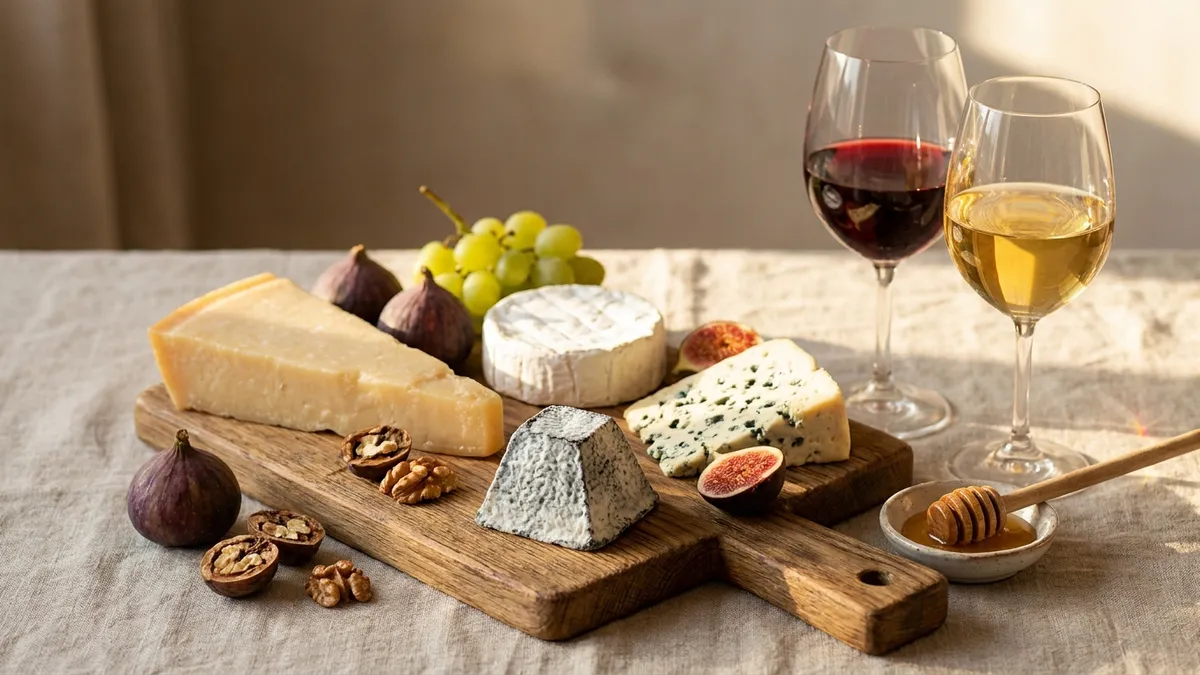
The fastest way to pair cheese and wine well is to sort your cheese into four families — fresh and soft, bloomy-rinded, hard and aged, and blue — then match each family to a wine style: crisp whites for fresh cheese, sparkling wine for creamy rinds, structured reds for hard cheese, and sweet wine for blue. Once you know which family is on your board, the right bottle is rarely more than one step away, and Moldovan wines cover every family gracefully.
Cheese is actually trickier than most foods. It is fatty, salty and sometimes pungent, and a big tannic red can taste metallic or bitter against the wrong wedge. The good news: acidity, bubbles and a touch of sweetness are cheese’s best friends, and those are exactly the qualities Moldova’s native white grapes — Fetească Albă, Fetească Regală and Viorica — bring to the table.
Four Rules That Make Cheese Pairing Easy
- Acidity is your reset button. A high-acid wine cuts through cheese fat and salt, refreshing your palate for the next bite.
- Bubbles love cream. Sparkling wine’s fizz physically scrubs rich, buttery textures from your tongue.
- Tannin needs age and hardness. Firm, aged cheeses soften tannins; soft fresh cheeses make tannic wines taste harsh.
- Sweet tames strong. The saltier and bluer the cheese, the sweeter the wine should be.
Fresh and Soft Cheeses: Crisp Whites
Fresh goat cheese, mozzarella, ricotta and Moldova’s own fresh brânză are mild, tangy and delicate. They want wines that are equally fresh: a young, unoaked white with bright acidity. In Moldovan terms, pour Fetească Albă or Fetească Regală — their citrus and white-flower notes echo the cheese’s clean tang without overwhelming it. Serve these cheeses with tomatoes, herbs or a drizzle of honey, and keep the wine well chilled. Avoid heavy oaked whites and tannic reds here; both will flatten the cheese’s freshness.
Bloomy Rinds and Creamy Cheeses: Bring Bubbles
Brie and camembert, with their soft rinds and buttery centres, coat the mouth — which is why sparkling wine is their classic partner. The bubbles and acidity of a Moldovan traditional-method sparkling wine, such as those matured at Cricova, slice through the cream and leave the palate clean. An unoaked, fuller white also works, and if you prefer red, choose a light, low-tannin style: a chilled Rară Neagră, with its soft texture and red-fruit character, is a far better brie companion than any blockbuster red.
Watch: Wine and Cheese Pairings Explained
This video walks through the same family-by-family logic — light and creamy cheeses with crisp wines, firm cheeses with structured bottles, and blue cheeses with sweet wines — with plenty of board-building ideas you can adapt to Moldovan bottles.
Hard and Aged Cheeses: Structured Reds
Parmesan, aged cheddar, mature Gouda and well-aged brânză de burduf are firm, concentrated and savoury, with crystals that crunch and flavours that linger. These are the cheeses that finally give red wine its moment. Their fat and protein soften tannins, while their intensity matches a wine with real structure. Pour Negru de Purcari, Moldova’s flagship red blend, or a mature Fetească Neagră: dark fruit, spice and firm tannins meet the cheese’s depth head-on. Nutty accompaniments — walnuts, hazelnuts, dried apricots — bridge the flavours beautifully.
Blue Cheese: Sweet Wine’s Finest Hour
Blue cheeses such as Roquefort or Gorgonzola are salty, sharp and pungent, and they bully dry wines into tasting thin and metallic. The classic solution is sweetness: a luscious sweet or late-harvest wine coats the palate, balances the salt and turns the cheese’s bite into richness. If you are building a Moldovan board, a sweet Moldovan white or even a small pour of Divin brandy alongside the blue wedge makes a memorable finish — the brandy’s dried-fruit warmth stands up to the cheese’s power.
Building a Moldovan Cheese Board
To put it all together, choose one cheese from each family, open two bottles — a crisp Fetească Albă and a structured red such as Negru de Purcari — and add a sparkling wine if the occasion allows. Serve cheeses at room temperature (take them out of the fridge an hour ahead), give each cheese its own knife, and add plain bread or crackers that will not compete with the flavours. Taste from mildest to strongest so the blue does not overwhelm everything after it.
Read also: Mămăligă, Plăcinte, and Sarmale: Traditional Dishes and Their Wines and Wine and Meat Pairing: Rules That Actually Work
Conclusion
Cheese and wine pairing is not about one perfect bottle but about matching families: crisp whites for fresh cheese, sparkling wine for bloomy rinds, structured reds for hard aged wedges, and sweet wine for blue. Moldova’s cellar is unusually well equipped for the whole board, from Fetească Albă to Negru de Purcari and Divin. Build a board, open two contrasting bottles, and let your own taste cast the deciding vote.
Frequently Asked Questions
What is the single most versatile wine for a mixed cheese board?
Sparkling wine. Its acidity and bubbles handle fresh, creamy and even many hard cheeses, which is why a bottle of Moldovan sparkling is the safest one-bottle answer for a varied board.
Why does red wine sometimes taste bad with cheese?
Strong tannins clash with the fat and salt of soft or pungent cheeses, producing a metallic, bitter impression. Save tannic reds for hard, aged cheeses, whose protein and fat soften the tannins instead.
Can Moldovan brânză be paired like other cheeses?
Yes — treat fresh brânză like fresh goat cheese (crisp whites such as Fetească Albă) and aged, salty brânză de burduf like a hard aged cheese (structured reds such as Negru de Purcari).