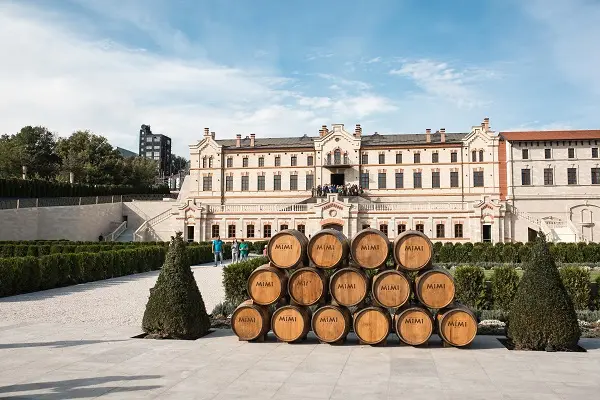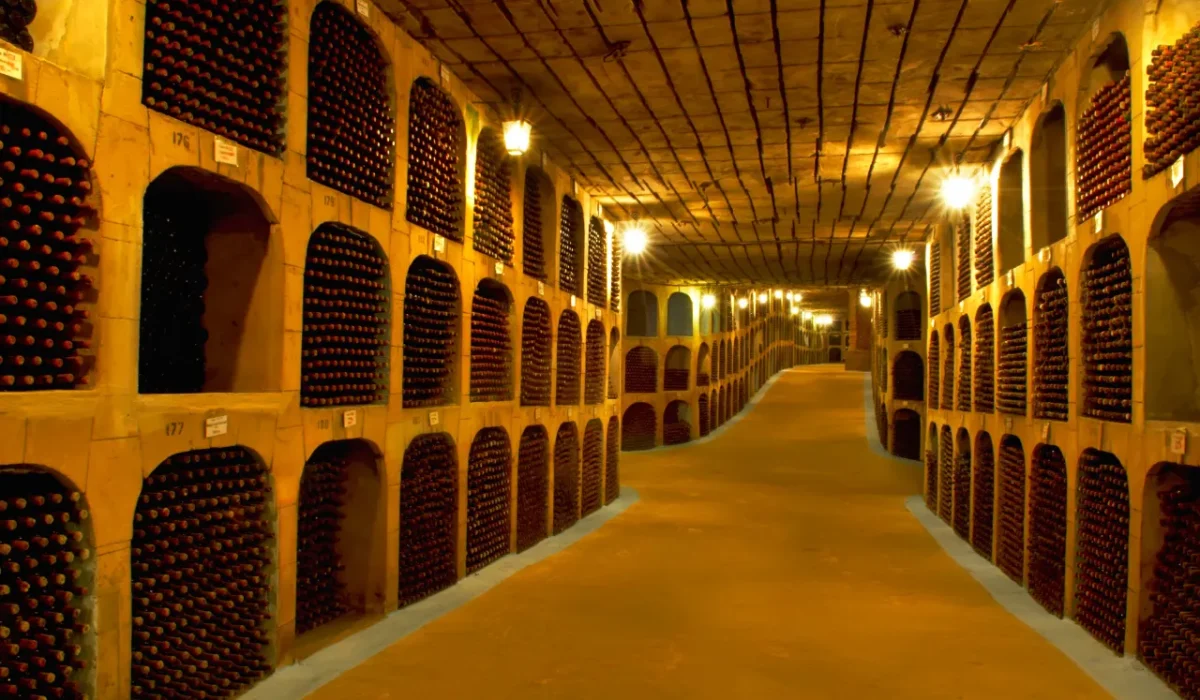
Cricova is the most famous winery in Moldova: an entire underground wine city carved into a former limestone quarry, with about 120 kilometres of tunnels running dozens of metres below the vineyards. Founded in 1952, Cricova is home to the National Wine Collection of Moldova, grand tasting halls and some of the country’s most celebrated traditional-method sparkling wines. If you visit only one Moldovan winery, this is the one most travellers choose — and it fully lives up to its legend.
What Is Cricova?
Cricova began in 1952, when Moldova’s winemakers started using the cool galleries of a limestone quarry near Chișinău to store and age wine. The stone had been quarried for building the capital, and the empty tunnels turned out to be a natural cellar: dark, quiet and cool all year round. Over the decades, the galleries grew into a labyrinth of roughly 120 kilometres of underground avenues.
The tunnels are so large that visitors travel through them by small electric trains and cars rather than on foot. The underground “streets” carry the names of wines and grape varieties, so you might turn from Cabernet Avenue into a gallery dedicated to Fetească. It is less a cellar than a small town devoted entirely to wine.
What to See Underground
A standard tour moves through the working heart of the winery as well as its ceremonial spaces. Highlights usually include:
- The sparkling wine cellars, where bottles age on racks and are turned by hand in the traditional method.
- The National Wine Collection, Moldova’s official treasure of rare and historic bottles, kept under state care.
- Barrel halls lined with oak casks where red wines mature slowly in the cool air.
- The grand tasting halls, a series of richly decorated rooms where guided tastings are held.
- The underground cinema, a small theatre carved into the rock that screens a film about Moldovan wine.
- The tasting complex, where tours finish with a guided tasting of Cricova wines.
Watch: Inside the Cricova Wine City
The Sparkling Wine Tradition
Cricova is especially famous for its sparkling wine, produced by the traditional method — the same technique used in Champagne, with the second fermentation taking place inside the bottle. The deep limestone galleries provide the steady cool temperatures that slow ageing requires, and bottles rest here for years before release. Alongside the sparkling wines, Cricova produces still whites, rosés and reds from both international and Moldovan grape varieties, so a tasting usually gives a good cross-section of what the country does best.
Planning Your Visit
Cricova sits just outside Chișinău, which makes it an easy half-day or full-day trip from the capital. A few practical tips help you get the most from the experience:
- Book ahead. Tours are popular and run on a schedule; reserving in advance secures your preferred time and language.
- Dress warmly. The galleries stay cool throughout the year, so bring a jacket even in midsummer.
- Allow enough time. The complex is vast, and tours with tastings are unhurried — do not plan a tight schedule afterwards.
- Taste politely. Spittoons are provided at tastings; using them is normal, not rude, especially if you plan to visit a second winery the same day.
- Plan your ride. If you are tasting, arrange a driver, taxi or tour transport back to the city.
Autumn, around the grape harvest, is a lovely time to come, but the underground city is a year-round attraction because its climate never changes.
Read also: Mileștii Mici: Inside the Largest Wine Cellar in the World and Château Purcari and the Legend of Negru de Purcari
Conclusion
Cricova is more than a winery tour: it is a journey into the heart of Moldovan identity, through streets of limestone lined with the country’s finest bottles. Between the National Wine Collection, the sparkling wine galleries and the sheer scale of the place, it explains better than any museum why wine matters so much in Moldova. Pair it with a trip to its great underground neighbour, Mileștii Mici, and you will understand the two very different faces of Moldovan wine.
Frequently Asked Questions
How big is Cricova winery?
Cricova’s underground galleries stretch for about 120 kilometres in a former limestone quarry, dozens of metres below the surface. Only part of the network is used for wine storage and tours, but even that portion feels like a small underground town.
What is Cricova most famous for?
Cricova is best known for its traditional-method sparkling wines, its grand tasting halls and the National Wine Collection of Moldova, which is stored in its galleries. It was founded in 1952 and is a symbol of Moldovan winemaking.
Can you visit Cricova without a tour?
The underground complex is visited on guided tours, which typically include transport through the tunnels and a wine tasting. Booking ahead is recommended, especially in the harvest season and around Moldova’s National Wine Day in early October.
Sources & Further Reading
- Wine of Moldova — the official national wine brand.
- Moldovan wine — Wikipedia — history and background.
- Cricova winery tour on YouTube — the video featured above.