Good wine storage comes down to five things: keep bottles cool, dark, still, slightly humid and lying on their side. Get those right and even a modest cupboard will protect your wine for years; get them wrong — a warm kitchen rack above the oven, for instance — and a good bottle can be ruined in a single summer.
The encouraging news is that wine is tougher than its reputation suggests. It does not need a perfect cave; it needs protection from extremes and, above all, from change. Here is how to give it that at home.
Temperature: Cool, and Above All Stable
The classic cellar temperature is around 12–13 °C, and anything in the 10–15 °C range is perfectly fine for long-term storage. What damages wine is not a degree or two either way, but repeated swings: warmth speeds up ageing and can push corks out, while sharp drops can draw them in. Heat is the real enemy — wine regularly kept above about 24 °C ages prematurely and loses its freshness.
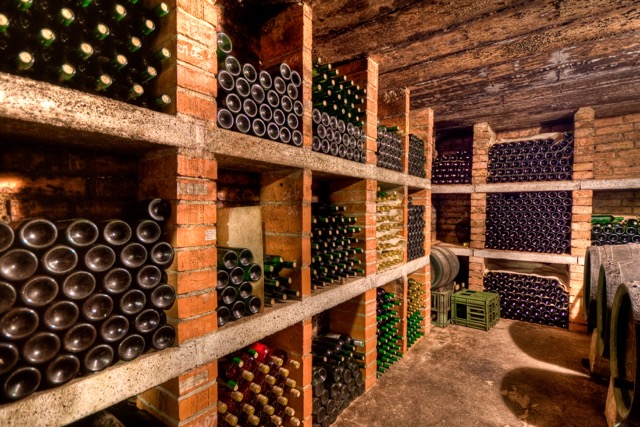
Nature solved this long ago in Moldova, where the vast limestone cellars of Cricova and Mileștii Mici hold a near-constant 12–14 °C all year round, deep underground. At home, imitate that stability as best you can: an interior cupboard, a basement or the floor of a wardrobe away from radiators and exterior walls that bake in the afternoon sun.
Light, Vibration and Smells: The Quiet Enemies
Three slower threats deserve attention, especially for bottles you plan to keep:
- Light — ultraviolet light degrades wine and can create unpleasant “light-struck” flavours, especially in white and sparkling wines. This is why cellars are dark and many bottles are made of tinted glass. Store wine away from windows and harsh lighting.
- Vibration — constant shaking disturbs sediment in older wines and is thought to accelerate chemical reactions. Avoid the top of the fridge or anywhere near a washing machine or speakers.
- Strong smells — over long periods, odours can creep past the cork. Keep wine away from paint, solvents, garlic stores and cleaning chemicals.
Position and Humidity: Why Bottles Lie Down
Bottles sealed with a natural cork should be stored horizontally, so the wine stays in contact with the cork and keeps it swollen and airtight. A dried-out cork shrinks, lets oxygen in, and the wine oxidises. Humidity plays the same protective role from the outside: cellar air at roughly 60–75% relative humidity keeps corks from drying while staying dry enough to protect labels.
Screw caps and glass stoppers change the rules — those bottles can stand upright with no risk to the seal, which is why they are handy for everyday drinking wines. Sparkling wines, despite the folklore, also keep perfectly well standing up, though lying them down does no harm.
Watch: How to Store and Serve Wine
This short University Wine lesson walks through the golden rules of storage — temperature, darkness, humidity and position — and how they connect to serving:
Where to Store Wine If You Don’t Have a Cellar
Most homes have a workable spot once you know what to look for. In rough order of preference:
- A wine fridge — the easiest controlled environment, holding a steady temperature and humidity; worth it once your collection passes a couple of cases.
- A basement or cellar — naturally cool and dark; check it is not damp enough to rot labels or flood-prone.
- An interior cupboard or wardrobe — away from exterior walls, radiators and the kitchen’s heat; a simple min-max thermometer helps you confirm it stays stable.
- Under the stairs — often the coolest, darkest corner of the house.
One last perspective check: most everyday wines are made to be enjoyed within a few years of release, not cellared for decades. Store them decently, drink them in good time, and save the fuss for the special bottles — perhaps a Fetească Neagră you are keeping for a celebration.
Read also: Wine Serving Temperatures, Explained and How to Decant Wine (and When You Don’t Need To)
Conclusion
Cool and stable, dark, still, reasonably humid, and cork-sealed bottles on their side — that is the whole formula. You do not need Cricova’s two hundred kilometres of tunnels to store wine well; a quiet cupboard and a little consistency will keep your bottles in fine condition until the moment you open them.
Frequently Asked Questions
Can I store wine in a normal kitchen fridge?
For a few weeks, yes, but not for long-term storage. A fridge is colder and much drier than a cellar, and its motor vibrates; over months the cork can dry out and the wine can pick up food odours. It is a fine short stop before serving, not a home for your collection.
Do screw-cap bottles need to be stored on their side?
No. A screw cap does not dry out, so those bottles can stand upright indefinitely. Storing them sideways is harmless, just unnecessary.
How long can I keep an everyday bottle of wine?
Most inexpensive wines are made to drink within one to three years of the vintage. Well-made reds with good structure can improve for five to ten years or more, but if in doubt, open it — wine is for drinking, not for worrying about.