Decanting does two completely different jobs, and knowing which one you need tells you everything else. For young, powerful red wines, decanting means aeration — oxygen softens the tannins and opens the aromas. For older wines, it means separation — pouring the clear wine off the sediment that has formed in the bottle. Same jug, opposite techniques.
Why Wine Is Decanted: Air for the Young, Care for the Old
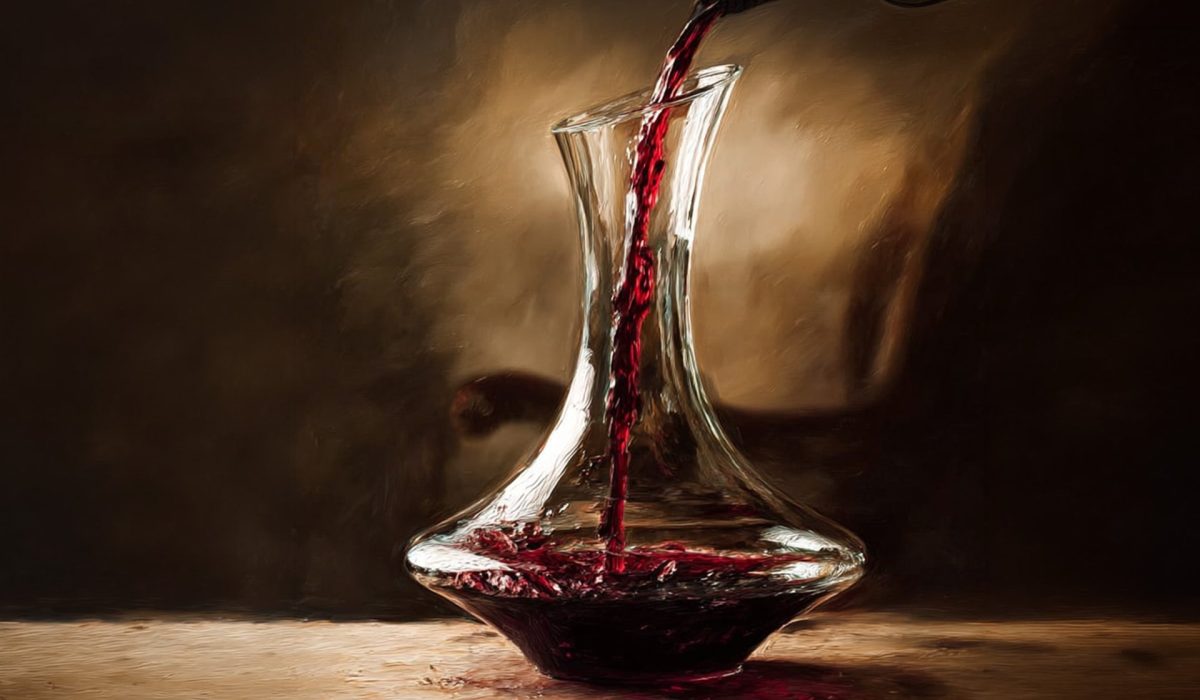
A young, tannic red — a two-year-old Cabernet blend or a robust young Fetească Neagră — often tastes tight and a little harsh straight from the bottle. An hour in a wide-based decanter lets oxygen work on it: harsh edges round off, fruit emerges, and the wine becomes noticeably more generous. This is the same effect as swirling in the glass, just stronger and faster.
An older bottle has the opposite problem. Over years, pigments and tannins bind together and fall as a fine sediment. It is harmless but gritty and bitter, and nobody wants it in the glass. Here the goal is not air but a clean pour: the wine is transferred gently, and the last cloudy centimetres stay behind in the bottle.
How to Decant, Step by Step
- Stand the bottle upright for at least a few hours — ideally a day — before opening, so the sediment settles to the bottom. This matters for old wines; young wines can skip it.
- Open the bottle and wipe the neck clean, inside and out.
- Pour slowly and steadily into the decanter in one smooth motion. For an old wine, hold a light — a candle or phone torch — just under the neck so you can see the wine running clear.
- Watch the neck, not the decanter. The moment you see dark sediment or cloudiness approaching the neck, stop. Leaving the last ounce behind is a fair price for a clean wine.
- For young wines, pour with confidence — even splash it down the side of the decanter — then swirl the decanter a few times to work in more air.
How Long Should Wine Sit in the Decanter?
- Young, tannic reds: 30 minutes to 2 hours; taste as you go.
- Medium-bodied reds: around 30–60 minutes is usually plenty.
- Older, fragile wines: decant just before serving and drink promptly — their aromas can fade within the hour.
- Full-bodied whites: an optional 15–30 minutes can help a very closed wine open up.
- Whites, rosés and sparkling wines: generally no decanting at all.
Watch: When (and How) to Decant Wine
In this Wine Folly video, Madeline Puckette decants a mature Bordeaux with nothing more than a flashlight and a steady hand — the classic sediment technique in action:
When You Don’t Need to Decant
Plenty of bottles are better off poured straight. Sparkling wine should never be decanted — you would pour away the very bubbles you paid for. Most crisp whites and rosés gain nothing and can lose their freshness. Everyday, inexpensive reds are made to be soft and fruity on release; a vigorous swirl in the glass is all the air they need. And very old, delicate wines are often best poured carefully straight from the bottle, glass by glass, so you can follow their brief, beautiful evolution rather than watching them fade in a decanter.
No decanter in the house? A clean water jug or carafe does exactly the same job. An aerator pourer is a decent shortcut for young reds, and “double decanting” — pouring the wine into a jug and straight back into the rinsed bottle — aerates in a hurry when guests are waiting.
Read also: Wine Glasses Explained: Does the Shape Really Matter? and How to Taste Wine Like a Pro: A Beginner’s Guide
Conclusion
Decant young wines to soften them, decant old wines to clean them, and leave everything else in the bottle. Stand old bottles upright, pour slowly with a light under the neck, stop at the first sign of sediment — and when in doubt, taste the wine first and let your palate, not a rule, make the call.
Frequently Asked Questions
Can you leave wine in a decanter too long?
Yes. Beyond a few hours, oxygen stops helping and starts harming: aromas flatten and the wine drifts towards vinegar. Robust young reds tolerate several hours; fragile old wines should be drunk within the hour.
Should I decant white wine?
Usually there is no need. A rich, oaked white that smells closed can benefit from 15–30 minutes in a decanter, but crisp whites, rosés and all sparkling wines are best poured straight from a chilled bottle.
What can I use instead of a decanter?
Any clean glass jug, carafe or even a large measuring jug works for aeration. For sediment, careful pouring from the bottle into glasses, watching each glass, achieves almost the same result.