Yes, the shape of a wine glass genuinely makes a difference — but probably a smaller one than glassware marketing suggests. A glass influences a wine in three real ways: it gathers (or loses) aromas, it steers where the wine lands on your tongue, and its stem keeps your hand’s heat off the wine. What it cannot do is rescue a bad wine — and you certainly do not need a different glass for every grape variety.
What a Glass Actually Does to Wine
Most of flavour is smell, and a wine glass is really an aroma-delivery device. The bowl gives the wine a wide surface so volatile aroma compounds can evaporate, and room to swirl without spilling. A rim that narrows towards the top traps those aromas and funnels them to your nose instead of letting them drift away. The rim’s shape and angle then decide how the wine flows onto the palate — onto the tip of the tongue or spread across it — which subtly changes whether acidity, fruit or tannin strikes first. Finally, the stem is a handle: hold it, and the wine stays at the temperature you served it, instead of warming in your palm.
The Main Glass Shapes, Compared
- Bordeaux glass — tall with a broad bowl; the workhorse for full-bodied reds such as Cabernet blends or a structured Fetească Neagră. The height lets tannic wines breathe and directs them towards the back of the palate.
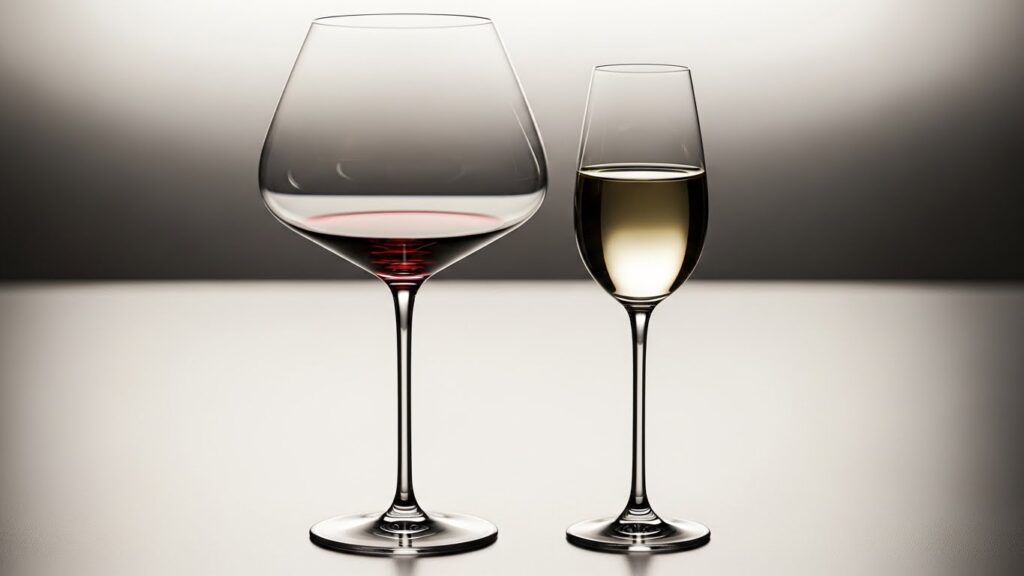
- Burgundy glass — a wider, rounder bowl with a tapered rim, built for delicate, aromatic reds like Pinot Noir or Rară Neagră; the big surface collects fragile floral and red-fruit aromas.
- White wine glass — smaller and narrower, keeping whites cool and focusing their fresher, lighter aromas.
- Sparkling glass — a tall, slim tulip is best: it preserves the bubbles far better than the wide coupe of cocktail legend, while still leaving room for aroma. A plain flute works too.
- Universal glass — a medium tulip that handles reds, whites and sparkling creditably; the sensible default for most homes.
- ISO tasting glass — the small, standardised glass professionals use at tastings, designed so every wine gets the same treatment.
Watch: Do You Really Need a Different Glass for Every Wine?
This Cork & Fizz “Mythbusters” episode tests the one-glass-per-variety idea against the science of bowl shape — a useful reality check before you fill a cupboard with stemware:
How to Choose — and Use — Your Glasses
If you are starting from zero, buy one set of good universal tulip glasses with thin rims and stems, and you are equipped for almost everything. Add a larger Bordeaux-style glass later only if you drink a lot of powerful reds. Thin glass matters more than fancy shapes: a fine, smooth rim lets wine flow cleanly, while a thick rolled rim gets in the way.
However good the glass, two habits matter more. First, fill only about a third of the bowl — the empty space above the wine is where the aromas collect, and it leaves room to swirl. Second, hold the glass by the stem, especially with chilled whites and sparkling wines; fingerprints on the bowl are the least of it — the real issue is heat.
One more Moldovan touch: at tastings in Cricova’s underground halls, the same wine is often poured into different glasses during tours, and the change in aroma is the single most convincing demonstration that shape matters — noticeable, enjoyable, but never a reason to refuse a decent wine served in a humble glass.
Read also: How to Taste Wine Like a Pro: A Beginner’s Guide and How to Store Wine at Home: Temperature, Light, and Position
Conclusion
Glass shape shapes aroma, delivery and temperature — a real effect, honestly sized. One good universal glass, filled a third full and held by the stem, will show you nearly everything a wine has to say. Spend the rest of the budget on the wine itself.
Frequently Asked Questions
How many different wine glasses do I really need?
One good universal tulip glass covers almost all wines. Two — a universal glass plus a larger red-wine glass — is a comfortable maximum for most people. A separate glass per grape variety is marketing, not necessity.
Are stemless glasses a mistake?
Not a mistake, but a compromise. They are sturdy and casual, yet your hand warms the wine and you cannot swirl as cleanly. They suit relaxed outdoor drinking; for a chilled white or a wine you want to study, a stem is better.
Does crystal really beat ordinary glass?
Fine crystal (or modern lead-free equivalents) can be spun thinner, giving a smoother rim and a slightly rougher surface that encourages aeration. The difference is pleasant but modest — a well-shaped ordinary glass beats a badly shaped crystal one.