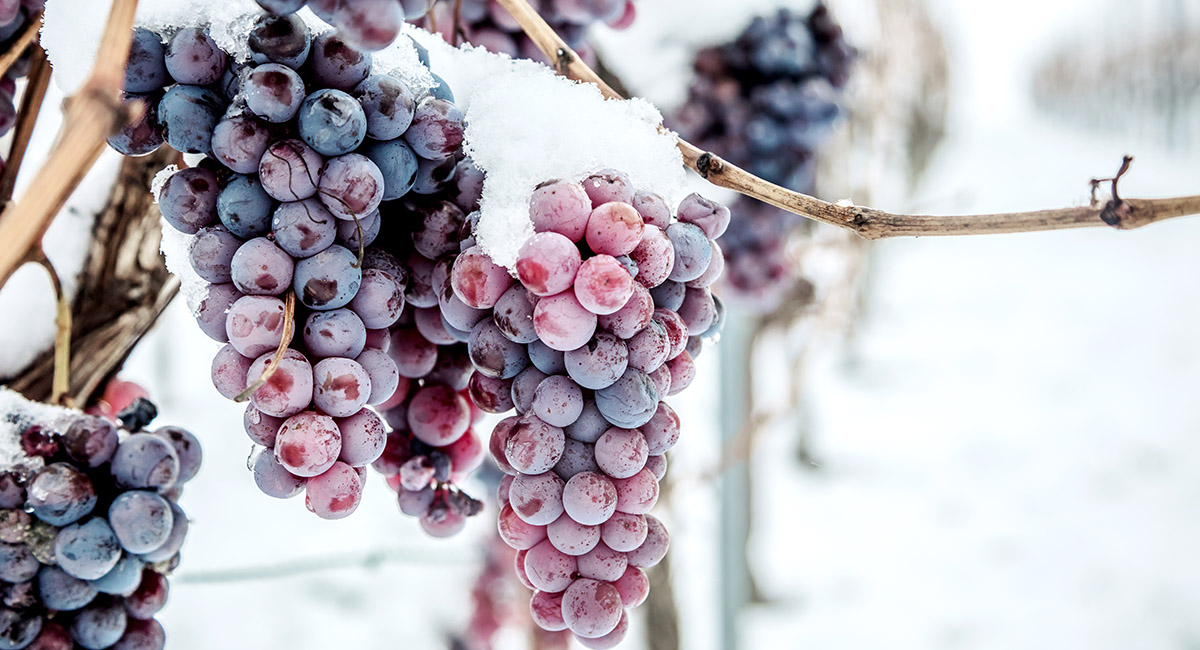
Ice wine and late-harvest wines are Moldova’s rarest sweet treasures: intensely concentrated dessert wines made in small quantities from grapes left on the vine long past the normal harvest. Moldova’s sharply continental winters — cold enough, in the right years, to freeze ripe grapes solid on the vine — make true ice wine possible here, while long, sunny autumns reward growers who gamble on extra hang time for late-harvest wines. Both styles are produced in tiny lots, and both are worth hunting down.
Late Harvest: Letting Grapes Ripen Longer
A late-harvest wine begins with a decision: leave healthy grapes hanging weeks after the main harvest. As the berries slowly lose water, their sugars, acids and flavours concentrate, and the fruit takes on notes of apricot, honey and dried citrus peel. It is a risky strategy — rain, rot and hungry birds can erase a crop — so growers reserve it for their best aromatic white varieties and their most sheltered plots. The reward is a naturally sweet wine of real depth, made without freezing, fortification or added sugar.
Ice Wine: Pressed While Frozen
Ice wine takes concentration one step further. Grapes are left on the vine into winter and picked only when temperatures fall far enough to freeze them through — traditionally at night or in the coldest hours of dawn. The frozen berries go straight to the press, where the water in each grape stays behind as ice and only a small volume of intensely sweet, syrup-like juice runs free. Fermentation of such rich juice is slow and delicate, and yields are famously tiny: a vine that would give a bottle of dry wine may give only a glass of ice wine. That scarcity is exactly why genuine ice wine commands attention everywhere it is made.
Watch: Harvesting Frozen Grapes for Ice Wine
This Associated Press footage shows winemakers picking and pressing frozen grapes, and explains how the cold concentrates the juice that becomes ice wine.
Why Moldova’s Winters Help
Most of the world’s ice wine comes from a handful of cold-climate regions, and Moldova’s continental climate puts it in that select company. When autumn is kind and the frost arrives on schedule, Moldovan growers can leave aromatic grapes to freeze naturally on the vine. It does not happen every year — a warm winter means no ice wine at all — so production stays small and vintage-dependent. In favourable years, a few Moldovan producers, including estates in the Purcari area of Ștefan Vodă, release ice wines that have become sought-after specialities, while late-harvest wines appear more regularly.
Grapes and Flavours
Aromatic white grapes are the raw material of choice. Traminer and Muscat-family varieties bring rose, lychee and spice; Riesling contributes structure and citrus; local grapes can add a floral Moldovan signature. In the glass, expect some combination of these flavours:
- Honey and apricot — the hallmark of sun-ripened, late-picked fruit.
- Dried citrus peel and marmalade — from long hang time and concentration.
- Tropical fruit and lychee — especially from Traminer and Muscat grapes.
- A streak of fresh acidity — the essential counterweight that keeps the sweetness lively rather than cloying.
How to Serve Moldovan Sweet Wines
Serve ice wine and late-harvest wines well chilled, at about 6–10 °C, in small glasses and small pours — a little goes a long way. They shine with blue cheese, foie gras-style starters, fruit tarts, nut-based desserts and good conversation at the end of a meal; many drinkers prefer them solo, as dessert in themselves. Unopened bottles keep for years thanks to their sugar and acidity, and an opened bottle will hold in the fridge for several days.
Read also: Divin: Moldova’s Protected Brandy, Explained and Moldovan Red Wines: Styles, Grapes, and Bottles to Try
Conclusion
Moldova’s ice wines and late-harvest wines are labours of patience and luck: grapes gambled against the weather, winters that may or may not deliver the frost, and yields measured in glasses rather than cases. When everything aligns, the result is a honeyed, vivid dessert wine that captures the Moldovan autumn — and winter — in a single sip.
Frequently Asked Questions
Is ice wine made in Moldova every year?
No. True ice wine depends on grapes freezing naturally on the vine, which only happens in winters with the right cold snaps. In warm years there is simply no ice wine, which is why Moldovan ice wine is a small, vintage-dependent speciality.
What is the difference between late-harvest wine and ice wine?
Late-harvest grapes are picked late in autumn, concentrated by extra ripening and water loss. Ice-wine grapes go further: they freeze on the vine and are pressed while frozen, so much of the water is removed as ice, giving an even more concentrated juice.
How sweet is ice wine?
Very sweet — among the sweetest wines in the world — but good examples are balanced by vivid acidity, so they taste rich and refreshing rather than syrupy or heavy.
Sources & Further Reading
- Wine of Moldova — the official authority for Moldovan wine.
- Wine-Searcher — grape variety and wine style references.
- Watch: harvesting frozen grapes for ice wine on YouTube