In Moldova, the grape harvest is the most important season of the year: a few intense weeks, usually from September into October, when families, neighbours and whole villages pick the grapes their year’s wine will be made from. It is part work, part homecoming, part festival — and it ends, famously, with the National Wine Day celebrations in the capital, Chișinău.
To understand Moldovan wine, you have to understand its harvest. Here is when it happens, how the grapes are picked, and why the season means so much more than agriculture.
When Does the Moldovan Harvest Happen?
The first grapes of the season — early table varieties and fruit for sparkling wine — can be picked as early as late August, when acidity is still bright. The main wine harvest runs through September and October, as white varieties such as Fetească Albă and Viorica ripen first and the reds, including Fetească Neagră and Rară Neagră, follow. Some late-ripening varieties, and grapes destined for late-harvest sweet wines, may hang on the vine into November, concentrating sugar as the days turn cold.
The exact start moves every year. Winemakers walk the rows tasting berries and measuring sugar and acidity, waiting for the moment when ripeness and freshness meet. A rainy week can rush the decision; a sunny, dry autumn can allow the luxury of patience.
How the Grapes Are Picked
Moldova’s harvest combines the old and the new:
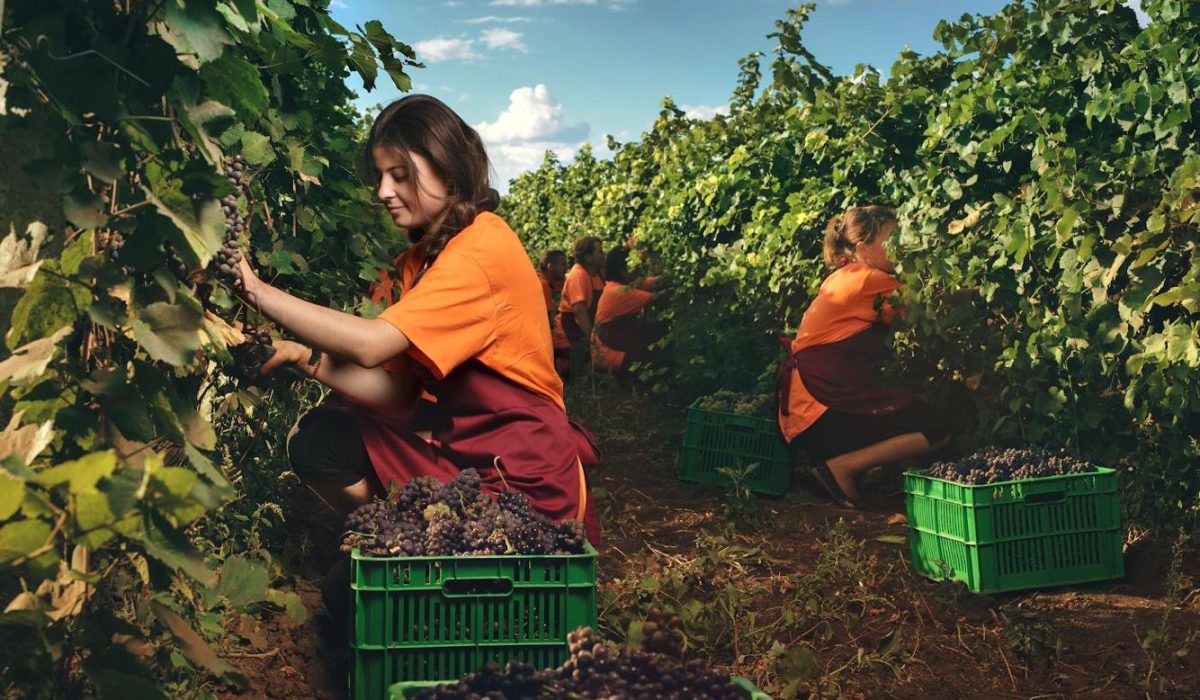
- Hand harvesting — families and seasonal teams pick bunch by bunch into buckets and crates, selecting only healthy fruit. This is still the norm for quality wines and for the country’s many small plots and household vineyards.
- Machine harvesting — larger commercial vineyards use mechanical harvesters that shake ripe berries from the vines quickly, often working at night when the fruit is cool.
- Fast transport — grapes are rushed to the winery, sometimes within hours, so fermentation starts on the winemaker’s terms, not the weather’s.
In the villages, the rhythm is older still: horses and carts once carried the harvest home, and in many places the whole extended family still gathers, with the oldest members directing operations from the shadiest spot in the yard.
Watch: Harvest Time at a Moldovan Winery
The video above, from Imperial Vin in the Valul lui Traian region, shows the scale of a modern Moldovan harvest — thousands of tonnes of grapes moving from vineyard to cellar in a matter of weeks.
A Village Celebration, Not Just a Work Season
Harvest in Moldova is woven into the calendar of village life. Relatives who have moved to the city return home to help. Long tables appear in courtyards, loaded with mămăligă, grilled meats, plăcinte and the first cloudy, sweet must of the new season, which everyone tastes before it has even finished fermenting.
The work itself is communal and unhurried in spirit, even when the days are long. Crushing often happens the same evening the grapes are picked, and the smell of fermenting must drifting from cellars and yards is, for many Moldovans, the defining scent of autumn. It is commonly said that wine is part of everyday life here — harvest season is when that becomes impossible to miss.
National Wine Day: The Harvest’s Grand Finale
The season reaches its official climax on the first weekend of October, when Chișinău hosts National Wine Day (Ziua Națională a Vinului). Wineries from all three of Moldova’s protected wine regions — Codru, Ștefan Vodă and Valul lui Traian — pour their wines in the capital’s central square, alongside folk music, dancing and traditional food. For visitors, it is the single best moment of the year to taste the breadth of Moldovan wine in one place.
How Harvest Decisions Shape the Wine
Harvest is also where wine quality is decided. Pick too early and reds taste green and thin; pick too late and whites lose their freshness. Careful picking — only ripe, healthy bunches, gathered at the coolest time of day — gives the winemaker clean fruit that needs little correction later. The celebration in the village square, in other words, rests on very serious work in the rows.
Read also: Homemade Wine: Moldova’s Village Tradition and Oak, Steel, or Amphora: How Aging Shapes Wine
Conclusion
The Moldovan harvest is where the country’s wine culture shows itself most clearly: part agricultural campaign, part family reunion, part national festival. From the first early-ripening whites in late August to the last late-harvest bunches in November, it is a season that fills cellars, empties into celebration, and reminds everyone involved that wine here is not a product so much as a way of marking the year.
Frequently Asked Questions
When is grape harvest season in Moldova?
The main harvest runs from September into October. Early varieties may be picked in late August, and grapes for late-harvest wines can remain on the vine into November.
What is National Wine Day in Moldova?
It is the country’s flagship wine festival, held in Chișinău on the first weekend of October, when wineries from across Moldova present their wines with music, dancing and traditional food.
Are Moldovan grapes picked by hand or by machine?
Both. Small plots, premium wines and household vineyards are picked by hand, while large commercial vineyards also use mechanical harvesters, often working at night to keep the fruit cool.